
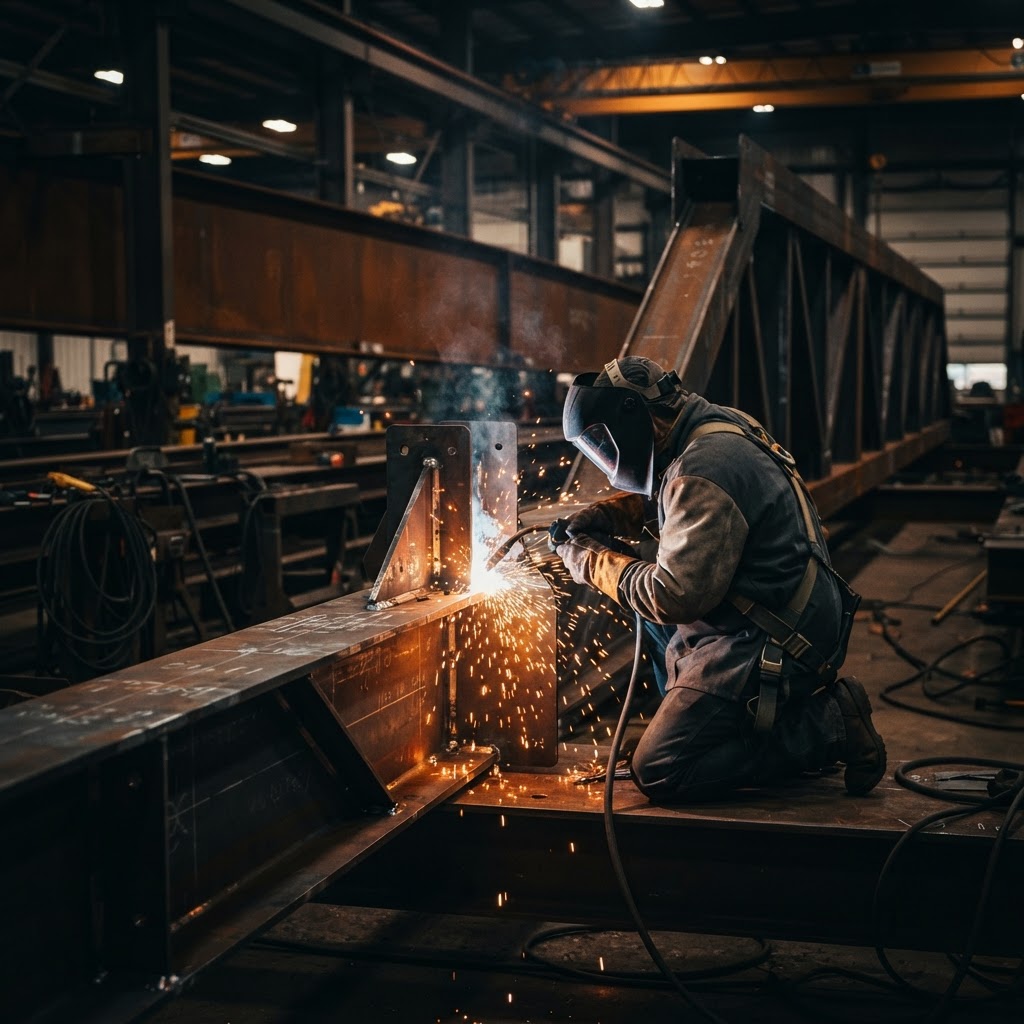
What AISC Certification Actually Means for Your Steel Fabrication Partner
When a project specification calls for an AISC-certified fabricator, many estimators treat it as a box to check rather than a meaningful differentiator. That's a mistake. The American Institute of Steel Construction's certification program is one of the few independently audited quality systems in the structural steel industry, and understanding what it actually verifies can help contractors, engineers, and owners make better decisions during bid evaluation and fabricator selection.
This article breaks down what AISC certification covers, why it matters for DOT and commercial projects, and what other factors should inform your due diligence when sourcing structural steel or bridge components.
What AISC Certification Verifies
AISC certification is not a one-time credential. It requires an initial audit and ongoing recertification, typically every three years, covering:
- Quality management systems — documented procedures for material traceability, welding procedure specifications (WPS), and nonconformance handling
- Personnel qualifications — welders certified to AWS D1.1 or D1.5 standards, with records maintained and renewed
- Equipment and facility capability — verified capacity to handle the tonnage and complexity a fabricator claims
- Project management controls — systems for tracking shop drawings, revisions, and approvals through fabrication
For bridge work specifically, the AISC Bridge Fabricator certification adds additional scrutiny around AASHTO/AWS D1.5 compliance, which governs fracture-critical and non-fracture-critical members differently. A fabricator holding this endorsement has demonstrated the documentation and inspection rigor DOT projects require, not just the welding skill.
Why This Matters Beyond the Checkbox
When a spec requires AISC certification, it's often because the engineer of record wants assurance that quality control exists independent of any single project manager's diligence. Certification means an auditor has reviewed the fabricator's systems, not just the owner's say-so. For a GC managing subcontractor risk, this reduces the likelihood of costly rework, failed inspections, or delays tied to documentation gaps.
Structural Steel vs. Bridge Fabrication: Different Standards, Different Risks
Many fabricators handle commercial structural steel but don't pursue bridge certification, and the distinction matters more than it might seem.
Structural steel fabrication for buildings typically follows AWS D1.1 and AISC 360 specifications, with tolerances and inspection requirements suited to static building loads. Bridge fabrication under AWS D1.5 involves:
- Stricter weld procedure qualification requirements
- Charpy V-Notch (CVN) impact testing for fracture-critical members
- More rigorous nondestructive testing (NDT) protocols, including ultrasonic and magnetic particle inspection
- Camber and sweep tolerances tied directly to live-load performance
A shop that's excellent at building steel isn't automatically equipped for bridge work. If you're a DOT contractor or engineer evaluating a fabricator for a highway or pedestrian bridge project, confirm their specific bridge certification status rather than assuming general AISC membership covers it.
Material Traceability on DOT Projects
DOT specifications almost universally require full material traceability—mill test reports (MTRs) linked to heat numbers, documented through every step of fabrication. This isn't bureaucratic overhead; it's what allows an agency to trace a material issue back to its source years after installation. Fabricators without disciplined traceability systems create liability exposure for the GC and owner, even if the steel itself performs fine.
Planning Lead Times: What Estimators Often Underestimate
One of the most common scheduling errors on structural steel projects is underestimating shop drawing approval cycles. A realistic fabrication timeline includes:
- Detailing and shop drawing production (1–3 weeks depending on complexity)
- Engineer/EOR review and markup (often the longest variable, especially on public projects with multiple review cycles)
- Material procurement, which has seen volatility in lead times for certain plate thicknesses and structural shapes
- Fabrication and welding, sequenced around shop capacity and other active projects
- Quality inspection and NDT, particularly for bridge components
- Coating or galvanizing, often subcontracted and requiring its own scheduling window
- Logistics and delivery, which for oversized bridge girders may require permitted hauling routes
GCs who build schedules assuming fabrication starts the moment a contract is signed frequently find themselves compressed later. Engaging a fabricator early—even before full contract award, through early procurement or preconstruction services—can shave weeks off the critical path.
The Value of Regional Fabrication
For Southeast projects, sourcing from a regional fabricator with nationwide shipping capability offers two advantages that are easy to overlook in a purely price-driven comparison: reduced freight risk for oversized loads and faster response time for field-fit issues. When a connection doesn't match in the field, a fabricator four hours away can often resolve it faster than one on the other side of the country, regardless of how competitive their initial quote was.
Questions Worth Asking Before You Award Steel Work
Whether you're a GC vetting subs or an owner reviewing a bid package, these questions reveal more than a certification certificate alone:
- What is your current shop capacity and backlog relative to our project's required start date?
- Can you provide references for projects of similar complexity, particularly fracture-critical bridge members if applicable?
- How do you handle nonconformance reports, and can you share your average resolution timeline?
- What NDT methods and frequencies do you apply, and are your inspectors certified to the relevant standard (e.g., AWS CWI)?
- How do you manage material substitutions if specified shapes face supply delays?
A fabricator's willingness to answer these in detail, rather than deflecting to generic marketing language, is itself a useful signal.
Conclusion
AISC certification, proper D1.5 bridge qualification, and disciplined material traceability aren't just compliance hurdles—they're practical tools for reducing project risk. For contractors and engineers managing structural steel or bridge work across the Southeast, understanding what these credentials actually verify, and asking the right diligence questions beyond the certificate itself, leads to fewer surprises in the field and a smoother path from shop drawing to final erection.